



Transferrin Receptor
TfR; CD71
Transferrin Receptor is a transmembrane glycoprotein. Transferrin Receptor consists of two isoforms, TfR1 and TfR2. Transferrin Receptor mediates the uptake of transferrin-iron complexes. Transferrin Receptor plays an important role in iron homeostasis as a gatekeeper regulating transferrin iron uptake. Transferrin Receptor is also considered as a proliferation marker and an attractive target for anticancer agents (e.g., a marker of poor prognosis in breast cancer).
Transferrin Receptor is associated with a variety of cancers including acute leukemia and breast cancer[1][2][3][4][5][6].
Verweise:
- [1]. Marsee DK, et al. CD71 (transferrin receptor): an effective marker for erythroid precursors in bone marrow biopsy specimens. Am J Clin Pathol. 2010 Sep;134(3):429-35. [Content Brief]
- [2]. Liu Q, et al. Significance of CD71 expression by flow cytometry in diagnosis of acute leukemia. Leuk Lymphoma. 2014 Apr;55(4):892-8. [Content Brief]
- [3]. Dong HY, et al. CD71 is selectively and ubiquitously expressed at high levels in erythroid precursors of all maturation stages: a comparative immunochemical study with glycophorin A and hemoglobin A. Am J Surg Pathol. 2011 May;35(5):723-32. [Content Brief]
- [4]. Habashy HO, et al. Transferrin receptor (CD71) is a marker of poor prognosis in breast cancer and can predict response to tamoxifen. Breast Cancer Res Treat. 2010 Jan;119(2):283-93. [Content Brief]
- [5]. Hagag AA, et al. Prognostic Value of Transferrin Receptor-1 (CD71) Expression in Acute Lymphoblastic Leukemia. Endocr Metab Immune Disord Drug Targets. 2018;18(6):610-617. [Content Brief]
- [6]. Kleven MD, et al. Transferrin Receptors TfR1 and TfR2 Bind Transferrin through Differing Mechanisms. Biochemistry. 2018 Mar 6;57(9):1552-1559. [Content Brief]
All Product Categories
-
Transferrin Receptor Verwandte Produkte (44)
Verwandte Produkte (44)

-
Holo-Bovine Transferrin
 0 ImagesHolo-Bovine Transferrin, a blood-plasma glycoprotein, is a target ligand for transferrin receptor. Holo-Bovine Transferrin can bind to and mediate the transport of iron.
-
Anti-CD71/TfR1 Antibody
 0 ImagesArt. -Nr.: HY-P991047Reinheit: ≥99.0%Synonyms: JR-141 antibody (uncoupled from iduronate 2-sulfatase)Anti-CD71/TfR1 Antibody (JR-141 antibody (uncoupled from iduronate 2-sulfatase)) is a humanized anti-human transferrin receptor (CD71/TfR1) antibody. Anti-CD71/TfR1 Antibody is the antibody part of the fusion protein Pabinafusp alfa (HY-P99797). The recommend isotype control of Anti-CD71/TfR1 Antibody: Human IgG1 kappa, Isotype Control (HY-P99001).
-
Delpacibart
 0 ImagesSynonyms: AOC-1001 Antibody; AOC-1044 AntibodyDelpacibart is a humanized IgG1κ monoclonal antibody targeting the transferrin receptor TFRC. Delpacibart can be conjugated with the phosphorodiamidate morpholino oligonucleotide (PMO) Zotadirsen (HY-177972), which targets exon 44 of the dystrophin gene, to synthesize the antibody-oligonucleotide conjugate (AOC) Delpacibart zotadirsen (HY-177564). Delpacibart is suitable for use in Duchenne muscular dystrophy (DMD44) research.
-
Pabinafusp alfa
 0 ImagesSynonyms: JR-141Pabinafusp alfa (JR-141) is a transferrin receptor-targeting antibody consisting of Iduronate 2-sulfatase (HY-P76399) and an anti-human transferrin receptor antibody. Pabinafusp alfa is blood-brain permeable and prevents heparan sulfate (HS) deposition in the central nervous system of mucopolysaccharidosis II (MPS II) mice. Pabinafusp alfa improves learning and prevents central nervous system neuronal damage in mice.
-
DSPE-PEG2000-T7
 0 ImagesArt. -Nr.: HY-172723DSPE-PEG2000-T7 is a PEGylated compound composed of DSPE and peptideT7. T7 (HAIYPRH) specifically binds to TfR. DSPE-PEG2000-T7 can be used to prepare T7-modified liposomes, where liposomes modified with both T7 and DA7R peptides can effectively co-deliver Doxorubicin (HY-15142A) and Vincristine (HY-N0488A) to gliomas. DSPE-PEG2000-T7 can also be used to prepare nanomodulators that mediate the co-delivery of tyrosine hydroxylase mRNA and interferon gene stimulator antagonists for synergistic intervention in Parkinson's disease.
-
Ferrous bisglycinate
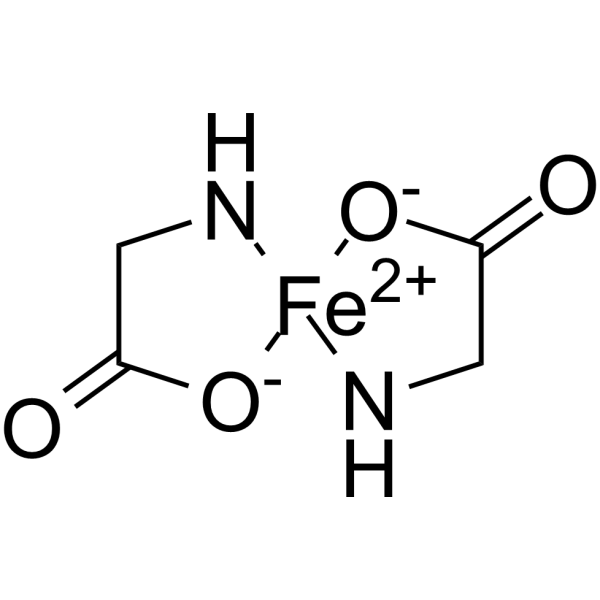 0 ImagesFerrous bisglycinate is an orally active iron fortificants and therapeutic iron supplements. Ferrous bisglycinate can be used for the research of iron deficiency anemia.
-
Apo-Bovine Transferrin
 0 ImagesArt. -Nr.: HY-P3267ACAS. Nr.: 11096-37-0Apo-Bovine Transferrin refers to iron free Transferrin (HY-P3267), serves as Transferrin receptor ligand and mediates iron release from endothelial cells. Apo-Transferrin can directly bind to hephaestin, which can convert Fe2+ to Fe3+. Apo-Transferrin mediates iron efflux most likely in cooperation with ferroportin 1. Apo-Bovine Transferrin can be used in neuroretinal research.
-
HAIYPRH hydrochloride
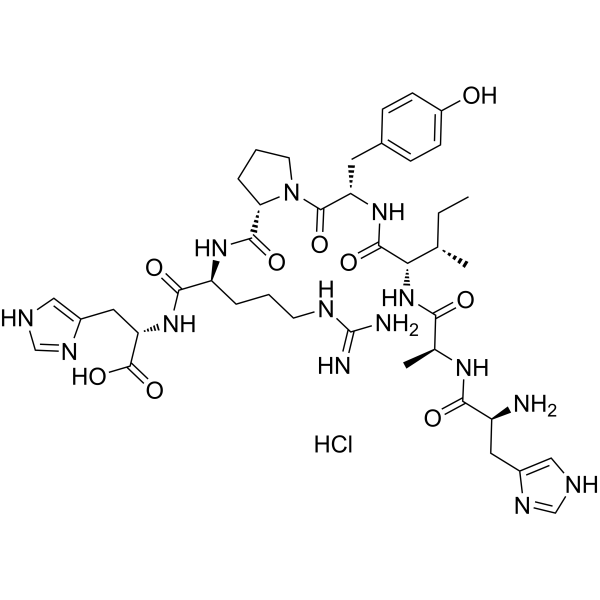 0 ImagesArt. -Nr.: HY-P2314Reinheit: 99.97%HAIYPRH hydrochloride, a targeting ligand, can specially bind to transferrin receptor (TfR). HAIYPRH hydrochloride can mediate the transport of nanocarriers across the blood-brain barrier.
-
TfR-1-IN-1
 0 ImagesArt. -Nr.: HY-159569CAS. Nr.: 1643444-62-5TfR-1-IN-1 is a transferrin receptor-1 (TfR-1) inhibitor with tumor cell-specific activity. TfR-1-IN-1 reduces TfR-1 expression, impairs mitochondrial function, induces cell apoptosis, necroptosis and ferroptosis, and increases intracellular iron (II) levels. TfR-1-IN-1 decreases the metabolic activity of cancer cells. TfR-1-IN-1 can be used for the research of ovarian cancer, breast cancer and acute myeloid leukemia.
-
TfR-T12
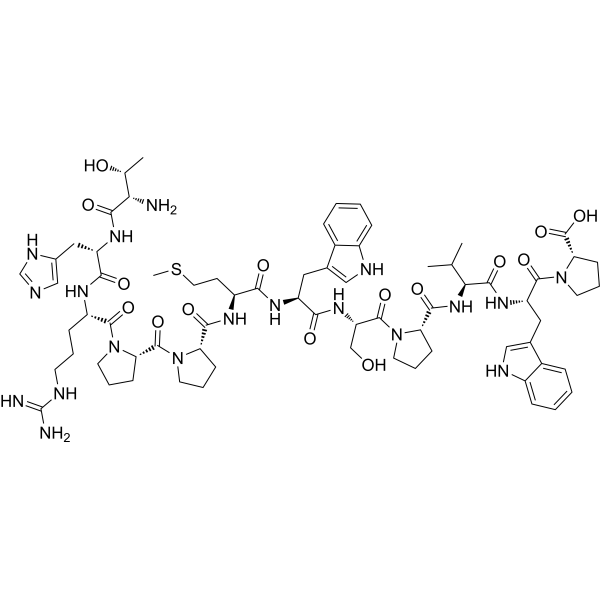 0 ImagesTfR-T12 is a BBB-penetrated transferrin receptor (TfR) binding peptide, displaying a binding affinity in the nM range.
-
Anti-Mouse CD71/TfR1 Antibody (8D3)
 0 ImagesArt. -Nr.: HY-P990129Reinheit: 98.77%Anti-Mouse CD71/TfR1 Antibody (8D3) is a rat-derived anti-mouse CD71/TfR1 IgG2a type antibody inhibitor. Anti-Mouse CD71/TfR1 Antibody (8D3) depletes of CD71+ erythroid cells but does not change percentages of Tregs in neonatal mice. Anti-Mouse CD71/TfR1 Antibody (8D3) enhances neonatal mice defence against infection.
-
Cys-LT7
 0 ImagesCys-LT7 is a transferrin receptor (TfR)-targeting peptide ligand. Cys-LT7 binds to a TfR site distinct from endogenous transferrin, mediates conjugated Doxorubicin (HY-15142A) delivery to TfR-overexpressed tumor cells, and exhibits low toxicity to TfR-low-expressed normal cells. Cys-LT7 is an L-configuration peptide susceptible to proteolytic enzymes, leading to poor biostability in peptide-drug conjugates. Cys-LT7 can be used for the research of glioblastoma, hepatocellular carcinoma, lung carcinoma.
-
Anti-CD71 Antibody (OKT-9)
 0 ImagesArt. -Nr.: HY-P990856Reinheit: 99.60%Anti-CD71 Antibody (OKT-9) is a kind of mouse IgG1 κ chimeric antibody, targeting to human CD71. Anti-CD71 Antibody (OKT-9) can recognize CD71 also known as Transferrin receptor protein 1 (TfR1). Anti-CD71 Antibody (OKT-9) can be used for the detections of immunohistochemistry, immunofluorescence and flow cytometry in cancer, such as leukemia and lymphoma.
-
Iron(II) fumarate
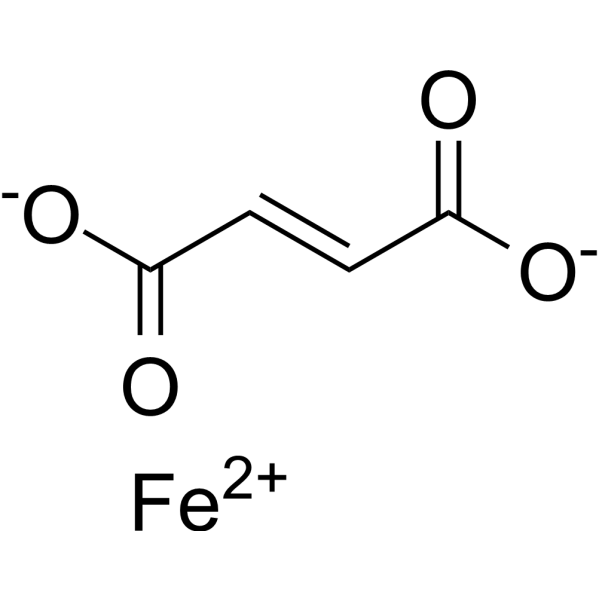 0 ImagesIron (II) fumarate is an orally effective active dietary supplement. Iron (II) fumarate can alleviate metabolic damage and damage to silkworms caused by cypermethrin (HY-123178). Iron (II) fumarate can be used for research on iron deficiency anemia.
-
Cy3-Transferrin
 0 ImagesArt. -Nr.: HY-D2426Cy3-Transferrin is a fluorescent labeling reagent that combines Cy3 (HY-D0822) fluorescent dye and Transferrin (HY-P3267). The Cy3 fluorophore is commonly used in applications such as immunolabeling, nucleic acid labeling, fluorescence microscopy, and flow cytometry. Cy3 has an emission maximum around 562-570 nm. Transferrin, a blood-plasma glycoprotein, is a target ligand for transferrin receptor. Transferrin can bind to and mediate the transport of iron.
-
Anti-Mouse/Rat CD71/TfR1 Antibody (OX-26)
 0 ImagesArt. -Nr.: HY-P990130Anti-Mouse/Rat CD71/TfR1 Antibody (OX-26) is a mouse-derived IgG2a κ type antibody, targeting to mouse/rat CD71/TfR1. Anti-Mouse/Rat CD71/TfR1 Antibody (OX-26) targets the transferrin receptor and binds to an extracellular domain for the transferrin receptor. Anti-Mouse/Rat CD71/TfR1 Antibody (OX-26) can be used for the research in drug delivery, especially for drug delivery to the brain.
-
SYUIQ-5
 0 ImagesSYUIQ-5 is a G-quadruplex stabilizer. SYUIQ-5 stabilizes the c-myc promoter G-quadruplex, the VEGF promoter G-quadruplex, and the telomeric G-quadruplex. SYUIQ-5 selectively inhibits telomerase but not Taq polymerase, while decreasing c-myc/hTERT expression and dissociating NM23-H2. SYUIQ-5 induces growth arrest, senescence, autophagy, DNA damage response, telomere shortening, and apoptosis, accompanied by upregulation of p16/p21/p27, decreased TRF2, and pro-catabolic myotube changes. SYUIQ-5 can be used for research on leukemia, colon cancer, cervical cancer, nasopharyngeal carcinoma, Burkitt lymphoma, and sarcopenia.
-
DIM-3,5-Cl2
 0 ImagesDIM-3,5-Cl2 is an inverse NR4A1/NR4A2 agonist with KD values of 7.7 μM and 12.0 μM for NR4A1 and NR4A2, respectively. DIM-3,5-Cl2 acts as an inverse agonist to downregulate pro-oncogenic and proendometriotic gene products, and as an agonist to enhance NR4A1/2/Sp1/Sp4-mediated CD71 transactivation. DIM-3,5-Cl2 induces ferroptosis via ROS formation, lipoperoxidation, MDA production, and reduced GPX4, SLC7A11 expression. DIM-3,5-Cl2 induces apoptosis via PARP and caspase-3 cleavage, reduced BCL-2 expression, and inhibits cancer cell viability. DIM-3,5-Cl2 can be used for the research of triple negative breast cancer, endometriosis, and colorectal cancer.
-
TfR-T12 TFA
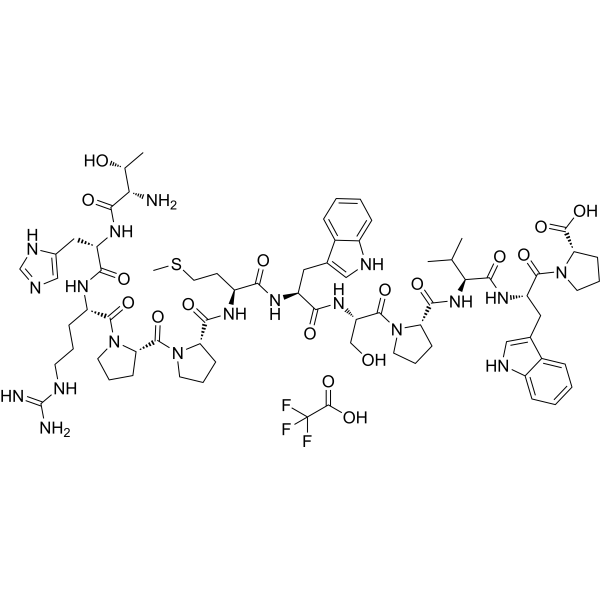 0 ImagesArt. -Nr.: HY-P2297AReinheit: 99.10%TfR-T12 TFA is a BBB-penetrated transferrin receptor (TfR) binding peptide, displaying a binding affinity in the nM range.



